
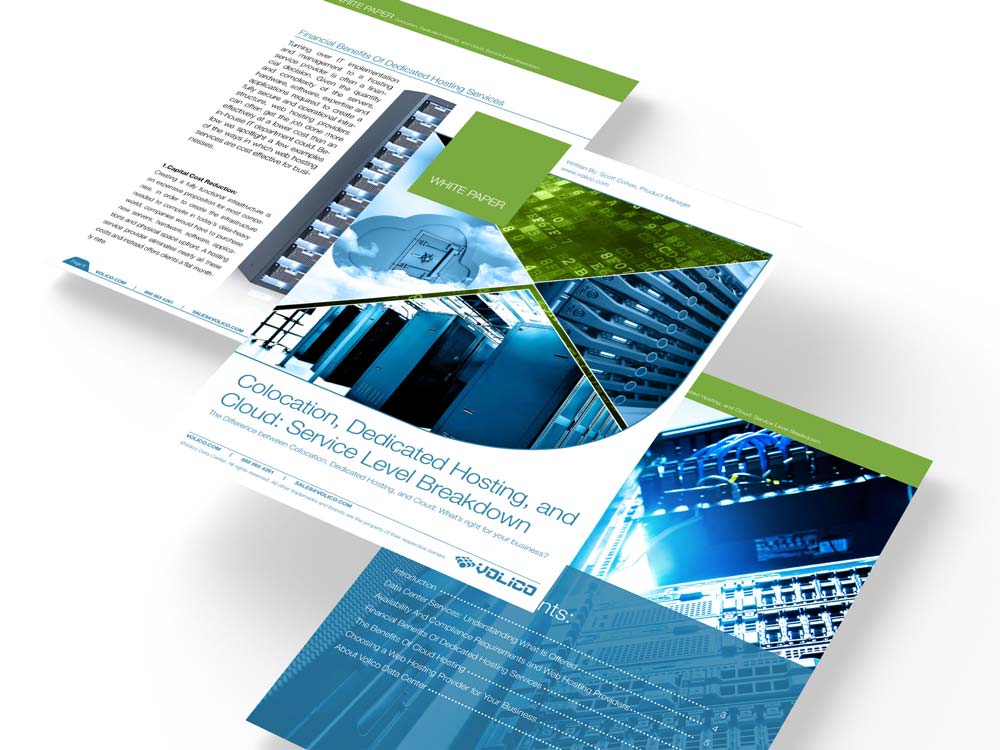
White Paper: Colocation, Dedicated Hosting, and Cloud: Service Level Breakdown
Home › Resources › White Papers › Colocation, Dedicated Hosting, and Cloud: Service Level Breakdown
Colocation, dedicated hosting, and cloud: which one fits your business?
Colocation, dedicated hosting, and cloud give you different levels of control, so the right choice depends on how much infrastructure you want to run yourself. This white paper compares them. It also covers the threats company IT systems face and current disaster recovery best practices.
In today’s IT security climate, every company should plan for disaster recovery (DR) so operations continue during a crisis. Still, research indicates that companies underestimate the need for DR and skip precautionary measures.
The paper recommends strategies that use cloud computing and data center services to lift the burden of DR planning off your team.
How colocation, dedicated hosting, and cloud differ
With colocation services, you own the servers and the provider supplies rack space, power, cooling, and connectivity. You keep full control of the hardware, but your team also handles maintenance and replacement.
With dedicated servers, the provider owns and maintains the hardware while you get exclusive use of it. This suits workloads that need consistent performance, since no other customer shares the machine.
With cloud hosting, you draw on a shared pool of virtual resources and scale up or down on demand. That flexibility is useful when traffic changes often, although costs need watching as usage grows. The NIST definition of cloud computing explains the core service models in detail.
What to compare before you choose
Every model shifts responsibility differently, so compare who handles hardware failures, security, backups, and support. Compare uptime commitments and response times in writing, because these terms vary by provider.
Share this White Paper
GET IT FREE
DOWNLOAD THE WHITE PAPER
To view the full white paper and download the PDF, please fill out the form below.