Power outages in data centers are one of the biggest risks to data safety and the continuity of digital services. These disruptions can cause substantial financial losses for businesses, along with data corruption and costly downtime for critical applications. The data center industry is growing fast to accommodate the rise of generative AI. As a result, we would expect more outages to appear in the statistics.
However, according to a fresh report from the Uptime Institute, incidents are rising more slowly than IT capacity is expanding. So, the frequency of data center outages seems to be dropping despite the increase in capacity, which is good news.
Still, when power outages in data centers do occur, they can be devastating. Common causes of blackouts are equipment failures, natural disasters, insufficient infrastructure, and human error. However, with a bit of attention in the right places, you can prevent many of these outages.
The importance of maintaining uninterrupted power in data centers is hard to overstate. Especially now that power demand is consistently one of the biggest challenges in the data center industry. Proactive measures are increasingly essential for ensuring operational stability and customer satisfaction. So, let’s look at the main causes of power outages in data centers and how to prevent them.
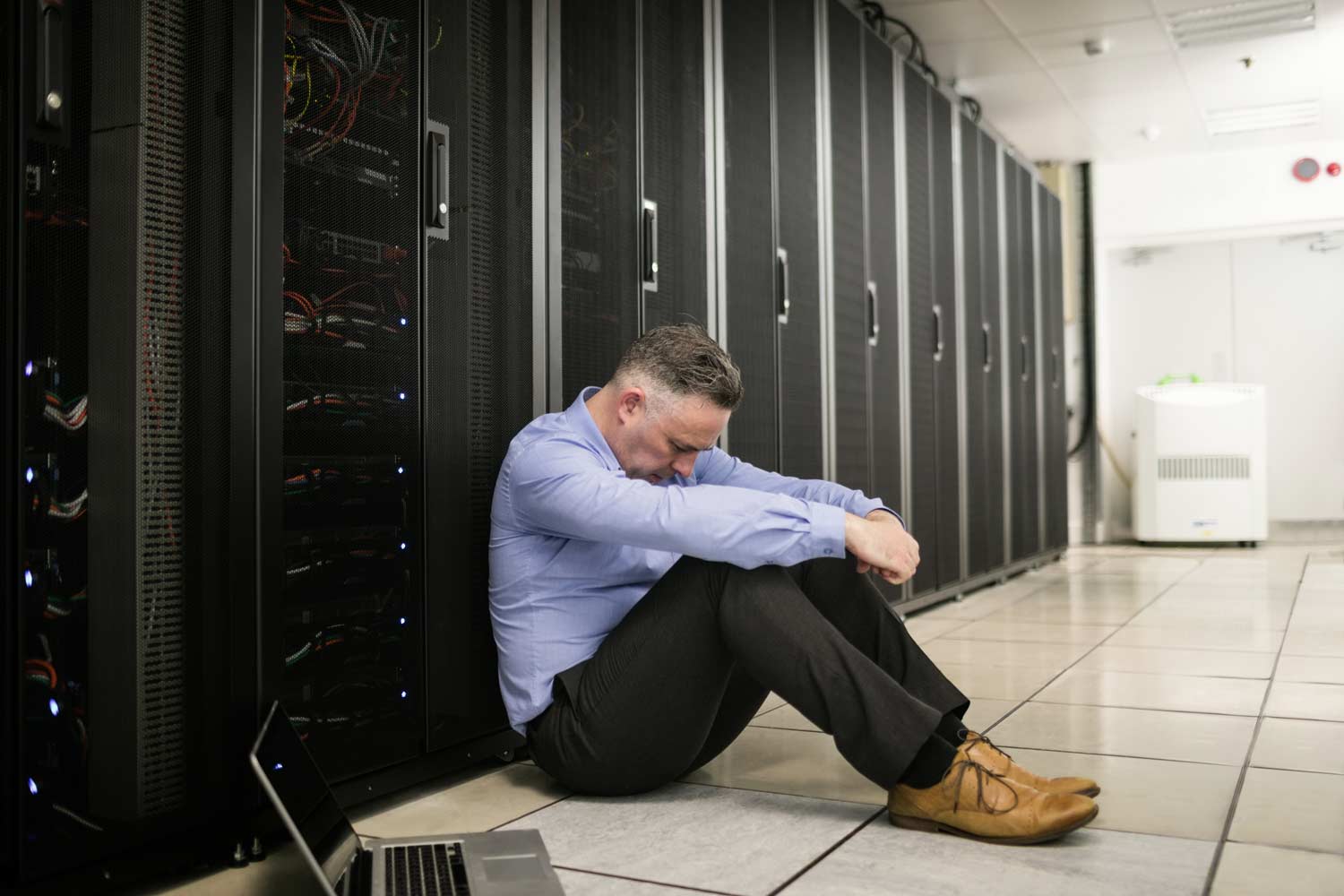
The Main Causes of Power Outages in Data Centers
Data center facilities are extremely complex, and many different things can cause errors. While the direct causes can be unpredictable, human error, insufficient redundancy, and failures can be lurking somewhere in the background. These can indirectly contribute to the outage and the time it takes to get back to normal functioning.
Power Grid Issues
Power grid issues are among the most frequently encountered causes of power outages in data centers. A data center draws power from a grid that serves a specific area. If the grid becomes unstable, everything connected to it suffers too.
Natural disasters or weather like lightning strikes, for example, can cause a lot of trouble. Storms can also damage power lines, leading to disruptions. When the grid fails, data centers that rely on it turn to backup solutions like generators and UPSs. These keep critical infrastructure running. However, backup solutions can also fail if the grid issue lasts too long. The same happens when the data center lacks a powerful level of redundancy. Also, according to the Uptime report, many outages occur when a UPS or generator can’t respond to a grid disruption.
Overvoltage Spikes
Power surges are disturbances that can damage electronic equipment and cause power outages in data centers. Overvoltage spikes often come from lightning strikes, power grid switching, or faulty wiring. They overwhelm the electrical infrastructure and can cause equipment failure. Power surges can occur from outlets with many connected devices.
Protector devices are an efficient way to prevent damage, since most data centers have many devices exposed to surges. If the voltage from a source rises above 169 volts, the system will power down to protect the equipment.
Cooling and Airflow Underperformance
Servers generate a lot of heat, so cooling is a key part of the data center infrastructure. It can also become a source of failure. Without efficient cooling, servers can overheat, damaging the equipment. Data centers have built-in functions that automatically power the equipment down to prevent this.
Keeping an eye on cooling is crucial to ruling out overheating-related power outages in data centers. Hot aisle and cold aisle containment and efficient airflow management are key. The smallest mistakes can influence airflow. Unnecessary objects left in the way can become obstructions, destroying the healthy data center environment and leading to overheating issues.
On-Site Power Distribution
The Uptime Institute reports that power distribution unit (PDU) issues account for 52 percent of power outages in data centers. PDUs distribute power to multiple devices and are critical components of the data center infrastructure. Problems can arise from faulty PDUs, improper load balancing, or inadequate maintenance, which can cause outages. PDUs can overheat, malfunction, and fail to supply consistent power, directly impacting connected servers and network devices. Regular maintenance, monitoring, and proper load distribution are key to keeping things running.
Circuit Overloading
Circuit overloading happens when electrical circuits receive more power than they can handle. This can happen when clients underestimate their power needs or improperly distribute the load. Overloaded circuits overheat, which can trip breakers and blow fuses, which will cut the power off. Besides the downtime, these sudden halts can damage hardware and corrupt data. To prevent power outages from circuit overloading, you need power usage policies, regular maintenance, and load balancing.
How Volico Reduces the Risk of Power Outages in its Data Centers
You can’t prevent a lightning strike, but you can prepare with redundancy and regular tests of your backup power supplies. However, many other causes of outages in data centers are possible to avoid with a high probability of success. Every client is different and has different assistance needs. Volico Data Centers offers support to assess, monitor, and manage your power needs so you avoid outages. We have a variety of prevention strategies and offer expert advice. We resolve emerging issues quickly, before they cause problems. Here are some of our key strategies.
Capacity Planning and Consultation
During onboarding, we assess the customer’s current infrastructure and power needs. Discussing workload, estimated growth, and compliance requirements helps to accurately assess the power provisioning needs. Depending on each customer’s needs, Volico can help calculate power needs for specific equipment and offer redundancy and backup recommendations. Scheduling future reviews can help adjust allocations as required.
Infrastructure Planning and Support
After a comprehensive evaluation, we develop a personalized power capacity plan. It ensures redundancy with A/B power feeds and efficient cooling solutions. The infrastructure layout includes optimal rack placement and organized cable management, which balance power distribution and ease maintenance. We also select the optimal PDUs and UPSs for continuous operation.
Optimization For Power Usage Effectiveness
Data centers can achieve better power usage effectiveness (PUE) by building efficient infrastructure. Real-time monitoring and advanced cooling then minimize energy waste. This offers not only a more sustainable solution but smaller bills as well, thanks to lower power consumption.
Real-time Server Monitoring
Volico offers server monitoring services to ensure the most efficient functioning. Real-time server monitoring from the data center provider helps in various ways. It matters most when a company lacks the resources to monitor its systems efficiently. Monitoring can help track down possible inefficiencies and failures that can cause power outages and react to them in time.
Load Balancing
Over-encumbered circuits often cause power outages in data centers. Load balancing services can help set up good power distribution across circuits to prevent overloading. Together with redundant power supplies (A/B feeds), load balancing can contribute significantly to preventing outages.
Scalable Approach
When businesses experience growth, power consumption and distribution needs can change radically. Changing requirements or fluctuations in workloads can influence needs. Volico’s team of professionals works closely with the customer to prevent disruptions and ensure continuous efficiency. We assess changing needs and scale with as much flexibility as possible.
Conclusion
Power outages in data centers sometimes happen despite all efforts and expertise. That’s why our team at Volico Data Centers constantly reevaluates, checks, and tests. We do everything we can to stay prepared and prevent avoidable outages.