Organizations increasingly look to colocation data centers to meet their networking needs. IDG research says around 65% of companies already use third-party facilities as part of their strategy, and colocation keeps gaining momentum. One reason is variety. These facilities offer rich connectivity services in carrier-neutral environments, so companies can scale their own services. Among the most popular of these services is the data center cross connect, which improves performance.
What is a data center cross connect?
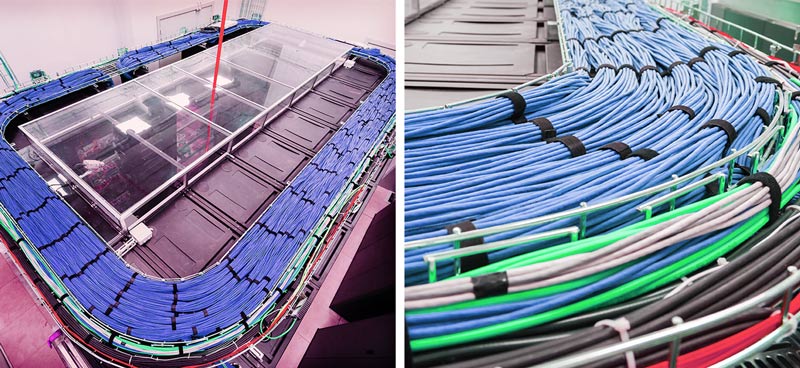
A data center cross-connect is a fiber, coaxial, or (most often) copper cable that links a client’s equipment directly to other clients inside the same data center. It moves data from one point to another between computing systems within the facility. Because the traffic never touches the public network, it avoids congestion and latency problems and keeps speeds consistently high.
Cross-connects also cost very little compared to traditional telecom connections for the bandwidth they deliver. They are more dependable too, since a construction crew cannot break the cable with a backhoe. They also make it easier for clients to do business with each other.
What cross-connects include
Jumpers, cords, and cables link separate units of equipment inside a data center. A single data center usually maintains them, but they can also span several data centers. Companies use them for different purposes:
- Cloud providers use cross-connects to link internet service providers and networks inside the same building, often for a single company.
- Trading firms use many cross-connects between servers so trades happen as fast as possible.
- Most companies use cross-connects to reach global networks, so they benefit from the pricing and redundancy.
Cross-connects help network administrators control a wider range of network equipment and tools. They reduce latency, improve performance, and make traffic flow easier to manage. They also give a more reliable and consistent experience than internet-based connections. In an emergency, they help limit data loss and support disaster recovery.
What is interconnection?
Interconnection is a private data exchange among enterprises, industries, and organizations. More precisely, it is the setup of IT traffic exchange points that use private, direct connections between parties. It works best in carrier-neutral data centers, where separate IT elements sit in the same facility. Data now crosses the globe with a click, and huge deals happen in the blink of an eye. As a result, digital business thrives on these interconnections.
How does a cross-connect improve performance?
Cross-connects bring three main benefits: more connectivity options, strong reliability, and reduced redundancy. Internet-based services have boomed over the last few decades. Still, internet providers cannot offer every service. Companies in areas with limited connectivity options can fall behind their competitors, and building a workaround can be prohibitively costly.
Carrier-neutral colocation data centers solve this problem. Their connectivity options let companies use the services they want right away. Because they offer lightning-fast cross-connections, these data centers suit companies that need multiple service providers and want better performance. They also support multi-cloud and hybrid deployments and the latest edge computing environments, so it is easy to see why many companies now use colocation to reach their IT infrastructure goals.
Tips for ordering carrier cross-connects
- Before you order, confirm the carrier’s equipment position and gather as much information as you can. Compare data centers, since some may offer a cheaper or better way to do it. Many also offer internet circuits and private circuits, so you do not have to manage individual carriers.
- Ask the carrier for a single-mode fiber handoff first, and be ready for your equipment to take over that handoff. If media conversion is necessary, the cross-connect will likely be less reliable and more costly.
- Order the carrier cross-connect as soon as you can and provide the LOA from the carrier. The LOA gives the data center the circuit information and the authority to connect your cross-connect to the carrier demarc.
- Expect one to two weeks for delivery before you can use the circuit. Wrong media, missing demarc jacks, or tag-and-locate requests can cause delays.
How data center cross-connects are priced
Pricing is likely the most confusing part of colocation. Data centers use many different cost models, so comparing them is hard. If you have tried to compare cross-connect pricing, you have probably come away more confused than before.
That is because data centers do not share a standard way to break down price. As a result, comparing packages is very difficult. Providers may break down their prices in several ways, such as:
- Pricing for network use and power
- Pricing for space, network use, and power
- Pricing for cooling power
- Pricing for cross-connects
Cross-connects are the connections between separate units inside the facility. For example, the uplink from your equipment in the data center to the service provider counts as a cross-connect. Cables between your own racks do not. The price depends on the number of cross-connects you have, plus the speed and type of the lines.
Got questions? Want to talk specifics? That’s what we’re here for.
A cross-connect lets you reduce the cost of reaching the carrier of your choice, so you can save money and improve your network connectivity. Contact us to learn how we can help you cut your network costs with affordable cross-connects to any carrier in our facilities or nearby data centers.